


Trisha S.
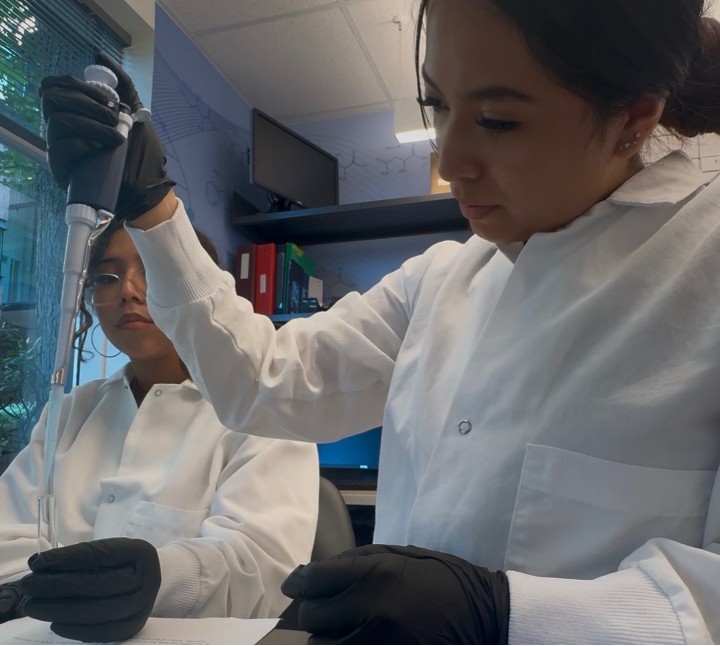
Hi! My name is Trisha, and I am a rising sophomore at Inglemoor High School. I am so grateful to have been a part of the 2026 Fred Hutch Explorers Session 2 cohort because I got to learn so many new things and meet so many amazing people. Over the past two weeks, we have gone on tours, listened to lectures, and – my personal favorite – done wet labs. All of these experiences have further strengthened my interest in science and research. Throughout this program, I have met people who have changed my perspective about my future and who have opened my eyes to the many possibilities of the future of science.
One of my favorite things we did was the PCR of BRCA1 lab. BRCA1 is a gene with a mutation which increases a person's risk of cancer because it acts as a tumor suppressor. Using a process called polymerase chain reaction (PCR), we can make copies of DNA. First the double helix strands of DNA separate. Next the primers attach to these strands. These primers tell the polymerase where to begin copying. Lastly, the Taq polymerase builds on the primer and creates a new strand. The final step is testing if the PCR reactions were successful. If so, the amplified DNA will fluoresce under a blue light. I really enjoyed this lab because it made me feel like a real scientist. When the TA’s turned off the lights, I remember feeling so excited that my lab partner and I successfully amplified DNA after I saw the way the microtube on the left, with the amplified DNA, glowed but the one on the right, the control, did not.

The result of our PCR of BRCA1 lab
Besides doing hands-on work in the training lab, I really enjoyed going on tours of different labs and buildings around the Fred Hutch campus and also the Allen Institute. However, my favorite tour was Dr. Bai’s lab where we saw C. elegans under a microscope. I found it interesting that they were hermaphrodites – meaning they had both sperm and egg – which made them similar to a plant, but their brains also had so many similarities to a human brain. I did not get a picture, but we also observed a C. elegan that had fluorescent dye injected in it and we could see its neurons, which I thought was really fascinating and made me realize how many different ways there are to study the brain. To me, neuroscience is very interesting so I particularly enjoyed going to this lab. This experience definitely made me want to pursue neuroscience even more.

C. elegans under the microscope
In addition to the labs and tours, I loved all the lectures from our guest speakers. Every one was interesting and engaging, and I know I'll keep thinking about them long after this program is over. Two of my favorites were Dr. Raabya and Dr. Paul's talk about their journeys to where they are today, and Dr. Jeanne's lecture on bioethics, which sparked a real interest in medical ethics for me. I'm so grateful to all of our guest speakers for taking the time to share their experiences with us, and to everyone who led our tours – especially Ms. LaToya for being so fun and lively during the glassware tour. Thank you also to the alumni who joined us at lunch and shared advice about the future. I especially loved talking with Huda, Akshara, and the SHIP students. And finally, a huge thank you to our TAs (Dustin, Kat, and Ariana) and of course, to Eden and Dr. G, for making this experience so amazing and unforgettable!

2026 Explorers Session 2


Comments