


Max Z.
For me, the Fred Hutch Explorers program has been both an amazing introduction into the biomedical sciences as well as a glimpse into the many careers and day-to-day lives of scientists. We toured through countless labs and facilities, conversing with all of various scientists and medical professionals - from the Allen Institute to the various guest speakers presenting their life works.
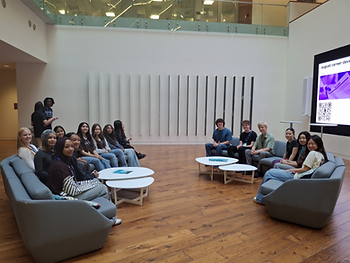
At the Allen Institute
One of the first highlights of my time here was touring the genomics lab. On the second day of the program, Ms. Dolores led us on a tour of the giant sequencing machines and explained in detail how the technology really operated. Though I had a great interest in RNA-seq prior to this, I had not quite realized the true scale of these machines - sequencing billions of base pairs at a time - and quite understandably, the millions that went into purchasing and running them. It was really a mind-opening experience to see how they loaded and operated them, and the physics behind their operations.

One of the genomic core’s sequencing models
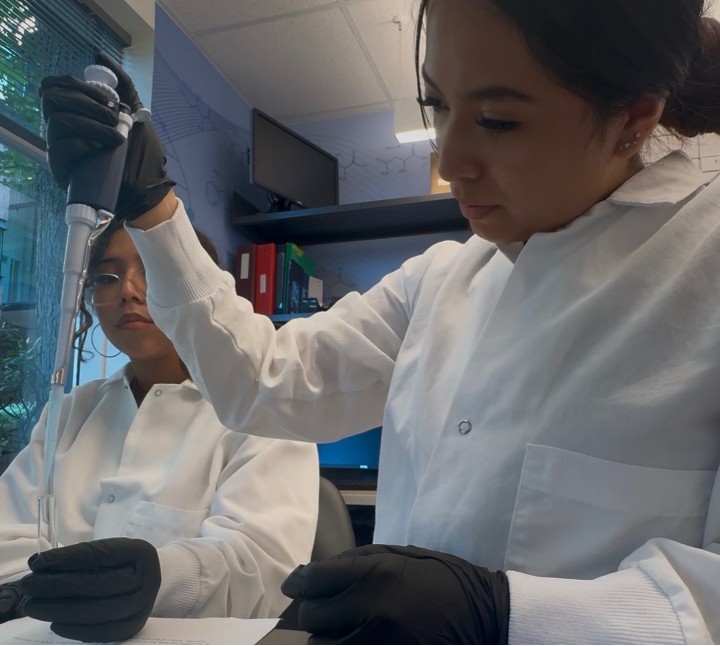
My favorite lab that I worked on here was the CRISPR lab, where we used different guide RNAs and the Cas9 protein to cut a tumor-suppressor gene, BRCA1, at defined and specific points. Our first step was to take the BRCA1 genes we had amplified using PCR and isolate the DNA into two samples. We then used two different gRNAs and Cas9 proteins on each sample to cut BRCA1 at two different points. Cas9 essentially uses gRNA as a molecular GPS, binding to a certain PAM sequence and making the cut 3 basepairs downstream. After cutting, we mixed the cut DNA with a dye and ran it in gel electrophoresis against a DNA ladder; this let us visualize how many base pairs were remaining in the cut DNA, allowing us to verify we had cut correctly.

Gel Electrophoresis on cut DNA
Personally, my favorite experience here was listening to all of the presentations by the undergraduates and lablaunch students, who each brought their unique, months-long research together and shared their discoveries. I was particularly intrigued by one undergrad’s research on hematopoietic stem cell gene therapy, in which certain stem cells are collected from the bone marrow and genetically modified; in this way, they can be returned to the blood and help cure inherited metabolic and immune disorders. Another presentation I really enjoyed was by a lablaunch student, who shared his experience analyzing blood and plasma samples collected from the clinic, which they would use to test for biomarkers and possible diseases.

An undergrad’s presentation on her HSC research
Apart from lab tours and guest speakers, I really enjoyed playing mafia and collaborating with my peers on puzzles, which was a great teambuilding experience and allowed me to really connect with this amazing community of intelligent peers. Overall, being able to see first-hand how real wet-labs worked and the current research being conducted in the field was absolutely an amazing experience, which I hope I may one day return to.


Comments